
Understanding water behaviour: RMA’s contribution to CATCHER innovation
The CATCHER project is built on a bold idea: converting atmospheric humidity into electricity. Behind this concept lies complex material science, where understanding how water interacts with advanced materials is a critical first step.
Within the project, the Royal Military Academy (RMA), Belgium, plays a key role in investigating these fundamental processes. Their work focuses on analysing how water vapour behaves at the interface of nanostructured materials — a crucial aspect for enabling efficient energy conversion.
From adsorption to energy generation
At the core of CATCHER’s technology is the adsorption of water molecules on material surfaces. This initial interaction triggers a chain of physicochemical processes that ultimately lead to electricity generation. RMA contributes by studying these mechanisms in detail, helping to optimise material performance and ensure long-term stability.
Partner contribution
Understanding Water Behaviour in Confined Spaces: Our Contribution to CATCHER
Characterising the textural properties of porous materials is essential to understand how molecules behave in confined spaces, including how they move through tiny channels to reach the most active sorption sites. Water, being an extremely small and polar molecule, tends to adsorb preferentially in very narrow pores (below 10 nm in diameter). This makes porous structure and connectivity, as well as surface chemistry, key factors in determining how much water can enter the material and how fast this process occurs.
Being part of the CATCHER project has been a wonderful opportunity. We are proud to have contributed, even modestly, to improving our understanding of how water vapour can ultimately generate electricity thanks to the unique properties of specific materials. Adsorption marks the very beginning of this process: it is the moment when water vapour molecules enter the porous material and interact with its active surface, triggering a sequence of events that eventually leads to energy production.
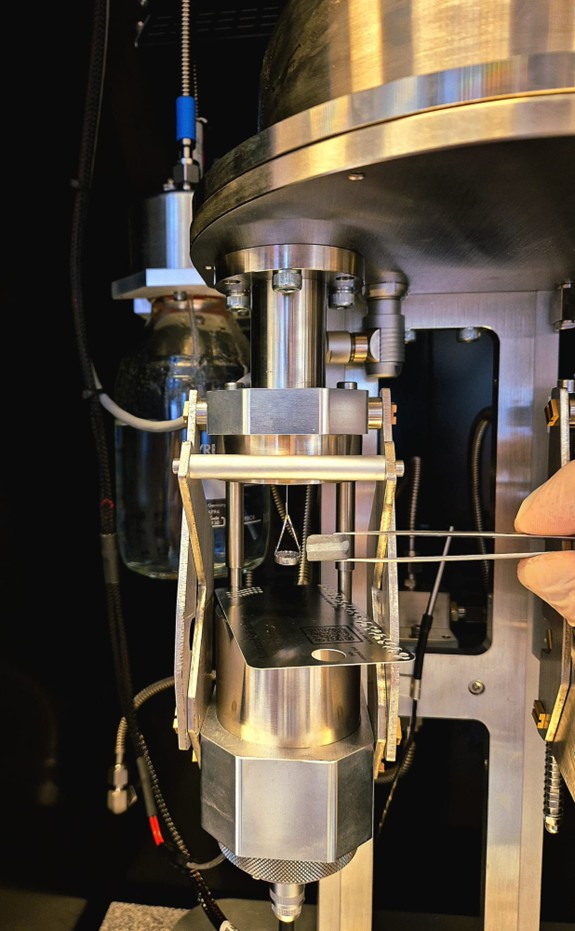
The affinity of the material for water molecules (its hydrophilicity) is determined by both the porous architecture and the surface functionalities. To characterise these features, we used a wide range of techniques, including gas sorption isotherms, mercury intrusion porosimetry, thermogravimetric analysis, SEM-EDX, and others. This combination of methods helped tailoring the optimal composition of the final materials and evaluate the influence of several synthesis parameters, such as temperature and compaction pressure. In parallel, water vapour sorption measurements were particularly important because they revealed the relative humidity ranges in which the material performs most efficiently, this being a key piece of information for predicting system performance under different climatic conditions. We also stored the samples under harsh humidity conditions for extended periods and re‑characterised them to assess their long‑term stability, which is an essential requirement for any real application.
We could not be happier to collaborate with CascataChuva, the visionary partner behind this innovative concept, and with the rest of the consortium. This work is especially relevant at a time when Europe needs to move decisively toward greater energy independence. Being part of this exciting journey has been a privilege… and hopefully this is just the beginning.
Why this matters for CATCHER
RMA’s work provides essential insights into how materials interact with humidity — a key factor for improving efficiency, reliability, and scalability of the CATCHER technology.
By deepening the understanding of adsorption processes and material behaviour, RMA supports the transition from scientific concept to practical energy solution. These foundational studies are crucial for strengthening the performance and future applicability of humidity-to-electricity conversion technologies.
As the innovation of CATCHER progresses, contributions such as RMA’s highlight how interdisciplinary expertise is driving innovation at the intersection of materials science and sustainable energy. Their work helps ensure that the project’s scientific foundations are robust enough to support future technological uptake.
Links
Project website and partner information:
Keywords
CATCHER, RMA, Royal Military Academy, humidity-to-electricity, nanomaterials, adsorption, renewable energy, materials science, EU research